Walking and Biking Perspectives on Active and Sustainable Transportation: National Complete Streets Coalition, Safe Routes to School, and America Walks
By Sarah Abel (M), Mae Hanzlik, Kate Kraft, Heidi Simon, Cass Isidro, and Margaux Mennesson
Walking, biking, transit, and other forms of active transportation have been shown to provide healthier options over single user vehicle trips when getting from point A to B; and can also be an ideal way to reduce carbon emissions and increase safety.
Increasing physical activity can reduce risk of chronic disease, improve mental health, and promote healthy aging, according to the U.S. Office of the Surgeon General, which has a campaign called Step It Up! that encourages walkable communities as a means to improve public health. Reinforced by the Step It Up! campaign, designing truly walkable communities allows people of all ages and abilities to be active. Transportation professionals should consider that 22 minutes a day of physical activity, such as walking, biking, or other forms of active transportation, can improve the health of most people.1 Making well-planned active transportation connections between essential community services and multiple land uses, as well as making sure those routes are accessible and safe, can encourage more people to walk or bike to home, work or other daily tasks.
Besides encouraging people to be more active, walking, biking, and transit can also be an ideal way to reduce carbon emissions. The transportation sector is one of the largest contributors to greenhouse gas emissions in the United States accounting for 28 percent of total U.S. carbon emissions in 2016, according to the Environmental Protection Agency.2 A strong bicycling emphasis, for example, can help reduce global carbon emissions from the transportation sector by 11 percent, according to the Institute for Transportation and Development Policy.3
Healthier and more sustainable forms of transportation can also mean less congestion and increased mobility. U.S. Census data from 2016 shows that more than 75 percent of commuters still choose to ride alone in their personal vehicles as a means of transportation.4 Single user car trips account for 86 percent of urban miles traveled, according to Federal Highway Administration travel data.5 According to the Transportation Policy Research Center, installing pedestrian and bicycle infrastructure creates a safer space to ride or walk on roads, and thus encourages more walking and biking in lieu of short vehicle trips.6 Thus, more people choosing to bike, walk, or take public transit can lead to less vehicle miles traveled(VMT).
While walking, biking, transit, and other forms of active transportation, like public transit and shared mobility, can lead to a greener environment, safety must also be considered when designing roads to accommodate all users. As more people choose to walk, bike, or choose other forms of active transportation, dangers to pedestrians and bicyclists have become more obvious and pronounced in recent decades. According to the Federal Highway Administration Office of Safety, bicyclist fatalities in the U.S. increased by 25 percent over the last decade.7 Similarly, the Pedestrian Fatalities 2018 Preliminary Data report from the Governors Highway Safety Association highlighted that 6,227 pedestrians in the United States were killed in motor vehicle crashes in 2018—a 4 percent increase since 2017 and one of the highest fatality rates since 1990.8
The organizations featured—National Complete Streets Coalition, Safe Routes to Schools National Partnership, and America Walks—sit at the table with ITE to advance better biking, walking, public transit, and other active transportation options nationally. These organizations help increase sustainable transportation options, bring awareness to the health and environmental benefits, encourage safe transportation for all, and support transportation professionals designing roads that safely accommodate more walking, biking, transit and active transportation.
While there are many organizations working in the realm of healthy and sustainable transportation, work by the National Complete Streets Coalition, Safe Routes to Schools National Partnership, and America Walks provide a national context on how active transportation can create safer, healthier, and greener roads for all users.
America Walks
America Walks works to ensure walkable communities are the foundation toward a greener tomorrow. Evidence shows that transportation accounts for over a quarter of all greenhouse gas emissions9 and, with 35 percent of all trips being less than two miles,5 finding alternatives for transportation can have a significant impact on helping to reach a healthier and more sustainable future. Making conscious decisions about how and why people move—such as choosing to walk or bike—can help cut down on the number of trips less than two miles.
Addressing climate concerns is just one reason America Walks is working to advance safe, equitable, and enjoyable walking conditions in neighborhoods, and empowering people and organizations to advocate for changes needed to create walkable communities and improve connections to transit. From neighborhoods to the national level, America Walks works to increase opportunities that make choosing the sidewalk instead of the car safe and accessible and showcasing and supporting partnerships with transit. Improved transit networks can provide access to greater distances not achievable with walking alone, and can still decrease greenhouse gases. Developing active, friendly routes to everyday destinations is at the core of the organization’s strategic vision and the work it supports.
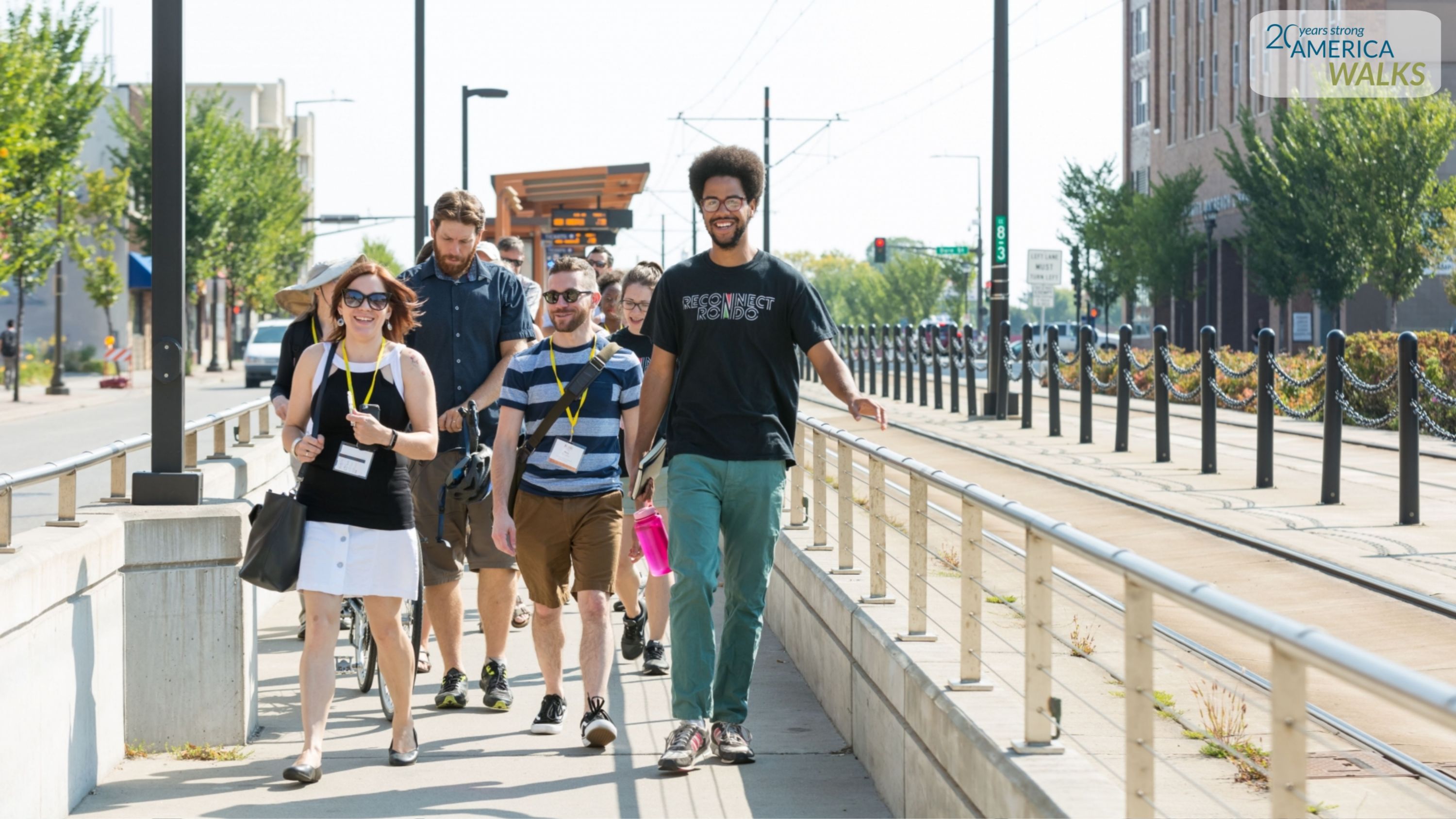
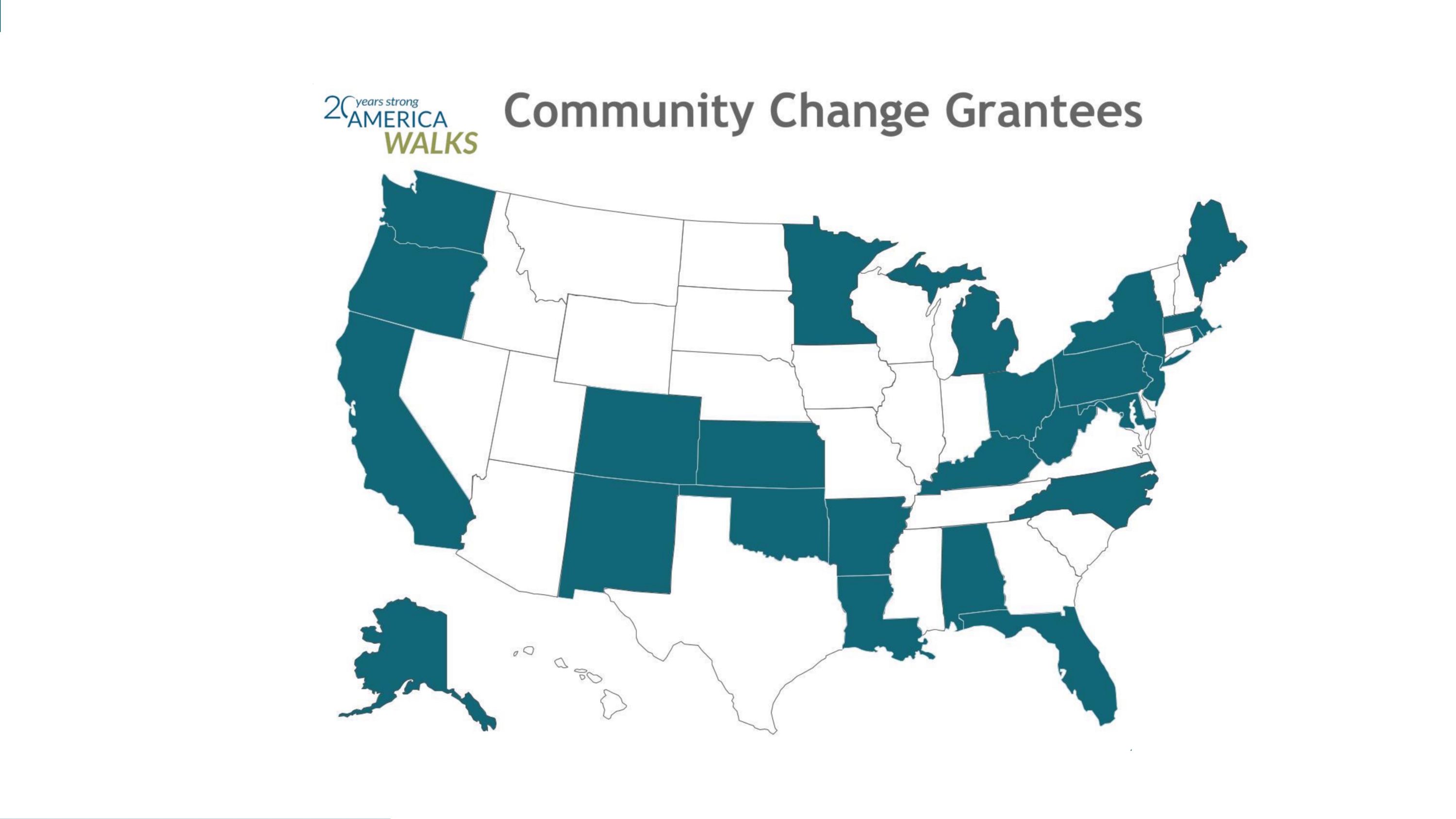
For more than 20 years, America Walks has provided training, resources, and support for community change agents on the skills and resources needed to create safe, accessible walking environments. Monthly webinars and regular online trainings are provided on the latest research, case studies, and practices that are improving pedestrian infrastructure and engaging more people in walking for transport and leisure. These programs work to build capacity to create change, whether it be the Community Change grants program that supports neighborhood innovations, or the Walking College program that has graduated almost 100 Fellows who are working to implement walking action plans developed with guidance from America Walks.
Improving capacity of local change agents alone will not move the needle. For this reason, America Walks works with mid-sized cities to teach pedestrian safe systems analysis and showcase implementation of feasible, safety countermeasures in all places, demonstrating how America Walks and its partners are constantly working to make walking a priority at the community and national level.
There are many documented benefits to walking and walkable communities, health, economics, and well-being, but perhaps none more urgent than the need to be a part of the network of solutions needed to address climate change. America Walks is committed to advancing communities that are safe, accessible, and enjoyable for everyone to walk and be active.
National Complete Streets Coalition
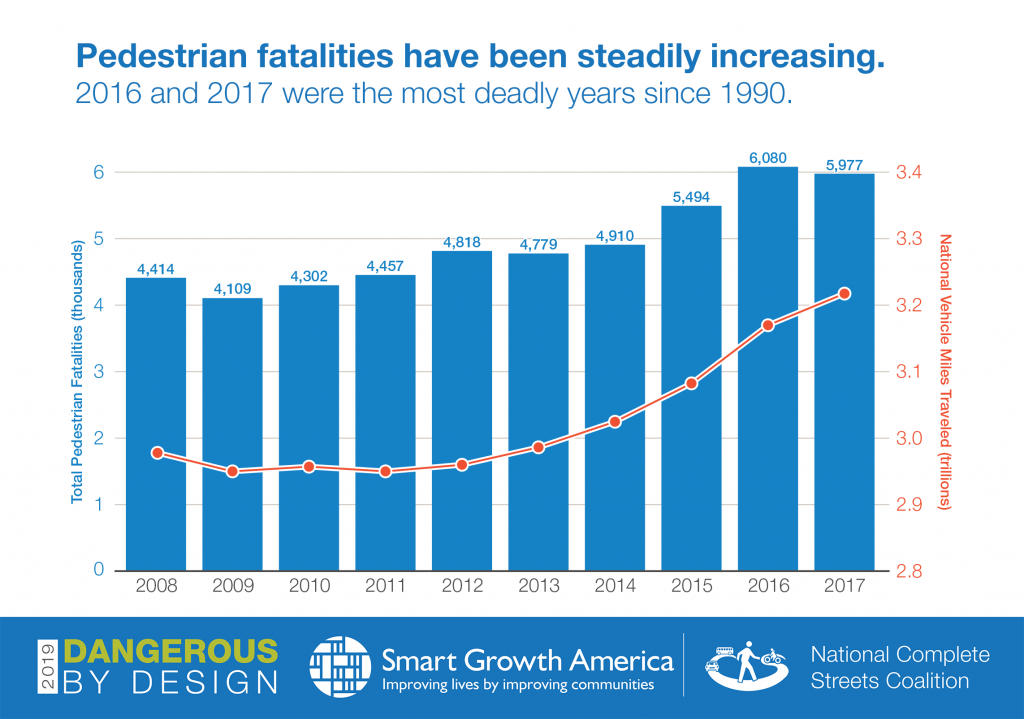
Between 2008 and 2017, drivers struck and killed 49,340 people who were walking on streets across the United States.8 These deaths are preventable. For decades, transportation has focused on moving cars, not people, as quickly as possible on our roadways, creating a system that’s dangerous by design for all people who use the road. Not only has this emphasis created unsafe conditions, it has also negatively impacted air quality and environmental health. Together, prioritizing car movement and building our communities in sprawling land use patterns on the scale of the car have contributed to transportation being the single largest source of greenhouse gases emissions, with driving alone represents 83 percent of the transportation sector’s emissions.9
These statistics are alarming and should worry every planning, engineering, and policymaking office across the United States, but transportation emissions continue to rise and U.S. streets aren’t getting safer fast enough. The 2019 edition of Dangerous by Design based on Fatality Analysis Reporting System (FARS), a national database of all fatal traffic crashes, indicates pedestrian fatalities while walking increased by 35 percent from 2008 to 2017. 10
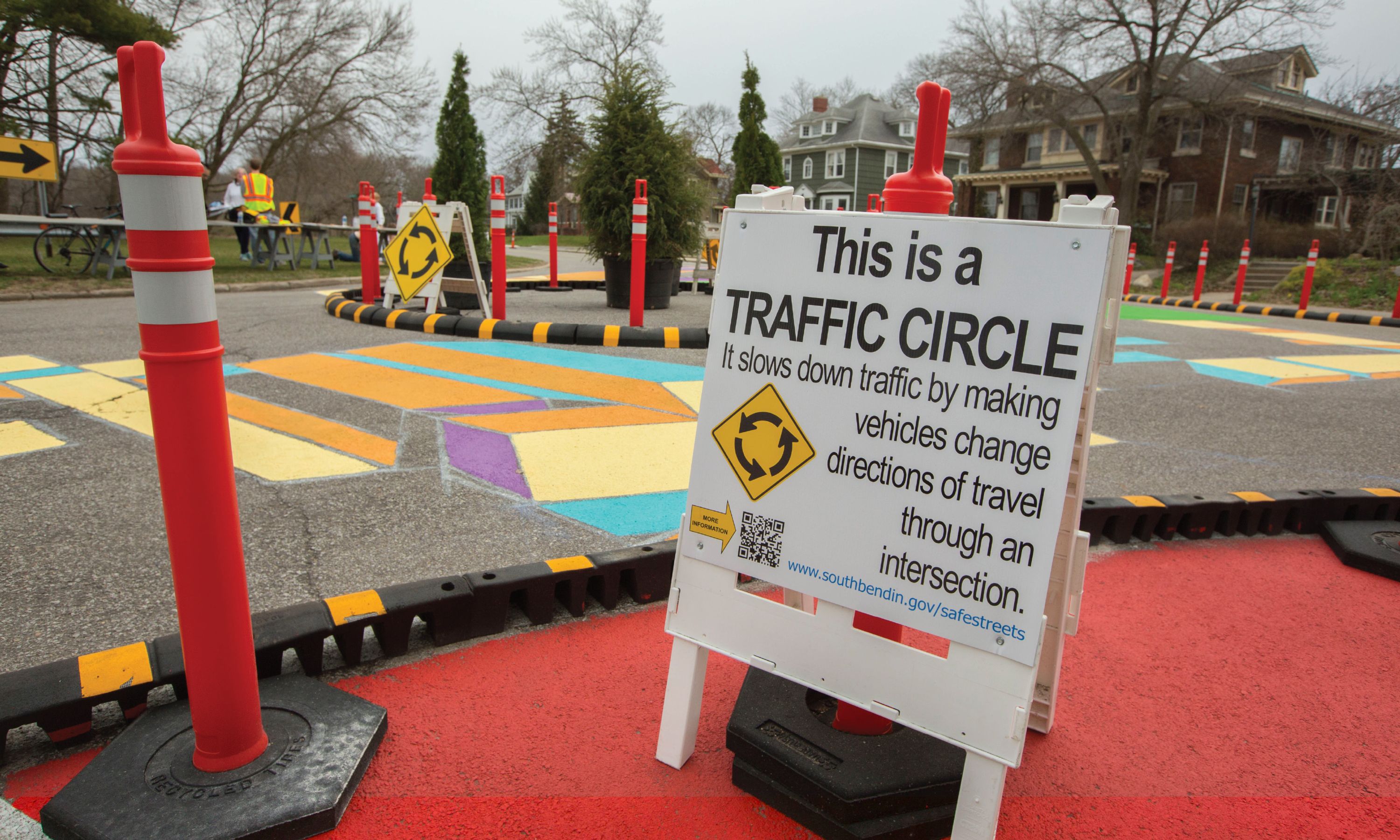
The good news is that these problems can be solved. The National Complete Streets Coalition (NCSC) has been working with teams of transportation planners, engineers, and partners from law enforcement, public transit, and new mobility providers to help cities make their communities safer. As part of the Safe Streets Smart Cities Academy teams from Huntsville, AL, USA; Durham, NC, USA; and Pittsburgh, PA, USA have been working to implement demonstration projects that use proven safety countermeasures, tactical urbanism, and emerging technologies to slow down traffic and create safer streets.
The National Complete Streets Coalition approaches include implementing temporary safety demonstration projects makes high-impact changes at low costs and transforms streets into more vibrant, sustainable, memorable places that people want to visit. This strategy helps cities test out new approaches for safer street design and build support among the community, elected leaders, and transportation professionals for prioritizing safe speeds in street design.
Adopting a Complete Streets policy is another tool that cities, states, and regional governments use to create more sustainable and safe transportation systems. Across the United States there are more than 1,400 Complete Street policies.11 A Complete Streets approach integrates people and place in the planning, design, construction, operation, and maintenance of our transportation networks. This helps to ensure streets are safe for people of all ages and abilities and balance the needs of different modes. Providing safe, reliable alternatives to driving in the form of walking, biking, and public transit as a matter of routine can also ultimately address harmful emissions. Research shows that walking and bicycling for the shortest trips (less than one mile), rather than taking a car, could reduce CO2 emissions—a major greenhouse gas—by 12 to 22 million tons per year in the United States.12
Safe Routes to School National Partnership
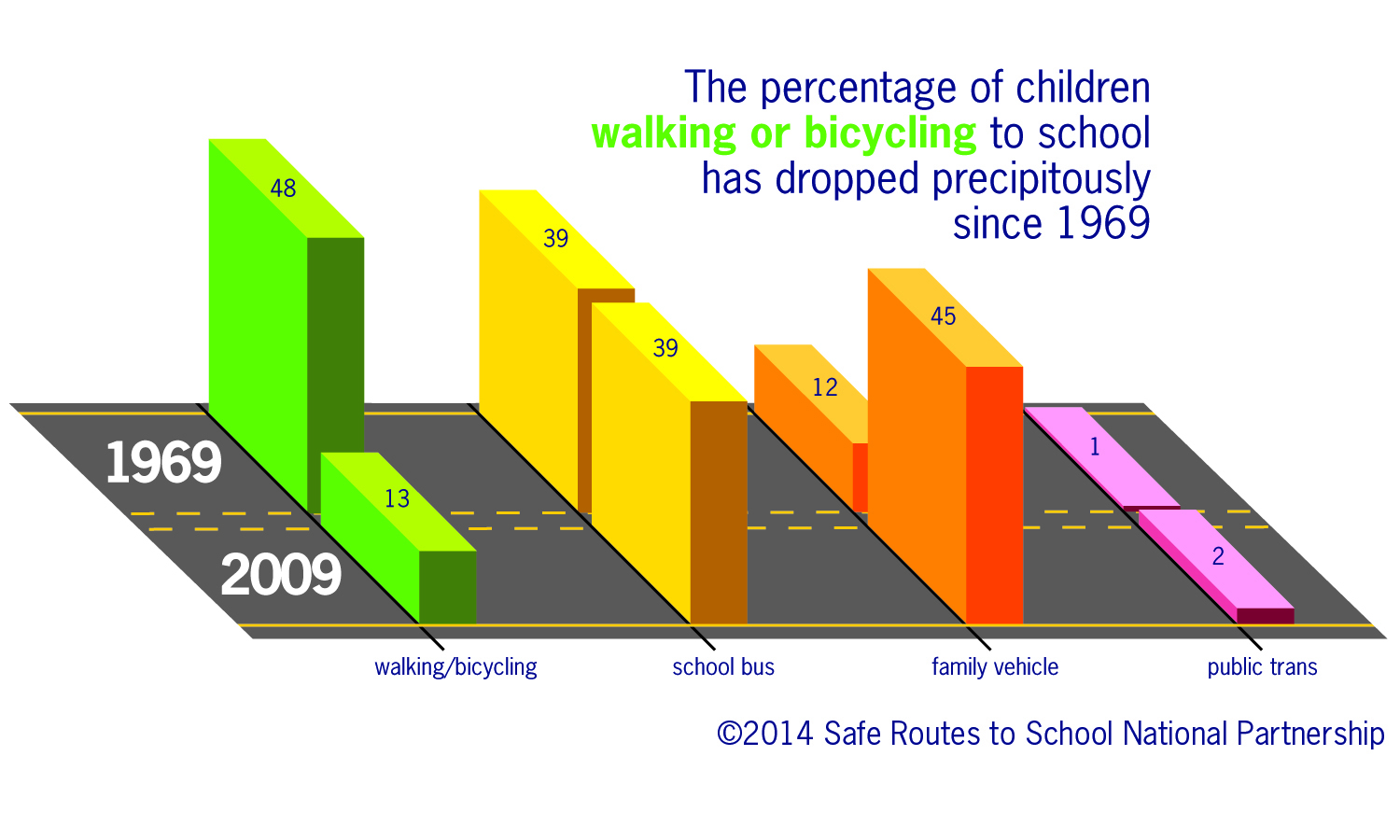
Just a few decades ago, it was normal for kids to get around their neighborhood by walking or biking. In 1969, 48 percent of children age 5 to 14 years usually walked to school each day. Today, only 13 percent of kids walk or bike to school.13 And it’s not just the trip to and from school that’s been eliminated—many people lack safe and convenient options to be physically active in their day-to-day life, or in their own neighborhood. Because of the way communities are designed, people can’t walk to their job, a park, or a grocery store with healthy food.
The Safe Routes to School National Partnership is committed to advancing safe walking and biking for people of all races, income levels, and abilities. That starts with making sure kids can safely walk and bike to school. Safe Routes to School programs are proven to effectively increase walking and biking to school and improve attendance, health, and wellbeing. In fact, studies show that Safe Routes to School programs increase walking and biking by as much as 37 percent.14 That makes a big difference in improving kids’ health, easing morning traffic congestion, decreasing traffic injuries, and reducing emissions that contribute to climate change.

The work of the Safe Routes to School National Partnership goes beyond schools. The organization advocates at the local, regional, state, and federal level to strengthen policies and increase funding for active transportation and healthy, equitable communities. Change movements are stronger and our communities are healthier when we look for connections and opportunities to support shared goals and outcomes. By partnering with organizations working on environmental justice, community safety, and healthy food access, Safe Routes to School seeks to support broad community goals. For example, the Safe Routes to Healthy Food initiative connects active transportation and food access to ensure that community members are able to safely walk, bike, or take public transit to healthy food options.
Active transportation options are also crucial for giving people access to recreation opportunities, parks, and natural space. Too often, communities that have experienced historical disinvestment, high levels of traffic incidences, crime and public safety challenges, and high rates of weight-related chronic disease have the least safe access to local public parks. The Safe Routes to Parks: Activating Communities program seeks to increase park usage and improve health for people of all ages, races, abilities, and income levels.
The Safe Routes to School National Partnership recently expanded their mission is to create healthy, equitable communities where all people can safely and easily walk to work, parks, healthy food, places of worship, and around the community.
As other organizations are working to advance walking, biking, transit, and other active transportation options, ITE continues to partner with other experts in similar fields—like America Walks, National Complete Streets Coalition, and the Safe Routes to School National Partnership—to advance standards and resources available to transportation professionals in the healthy and sustainable transportation space. Institute initiatives like Transportation and Health and Vision Zero continue to elevate the need to design our road network with health, sustainability and safety elements in mind. Resources like the Curbside Management Practitioners Guide, Implementing Context Sensitive Design on Multimodal Corridors: A Practitioner's Handbook and Designing Walkable Urban Thoroughfares: A Context Sensitive Approach provide practices for transportation professionals to design facilities for more waking, biking, transit and other active transportation options. Additionally, ITE’s continued technical work related to completely streets, pedestrian and bicycle infrastructure, transit, and sustainability also lend to more active and sustainability transportation design.
To become more involved in ITE work related to sustainable and active transportation, contact Luana Broshears, Planning and Safety Director, at lbroshears@ite.org.
References
- Step It Up! The Surgeon General’s Call to Action to Promote Walking and Walkable Communities.
- Fast Facts on Transportation Greenhouse Gas Emissions, United States Environmental Protection Agency. https://www.epa.gov/greenvehicles/fast-facts-transportation-greenhouse-gas-emissions [Accessed March 25, 2019].
- A Global High Shift Cycling Scenario: The Potential for Dramatically Increasing Bicycle and E-bike Use in Cities Around the World, with Estimated Energy, CO2, and Cost Impacts, Institute for Transportation and Development Policy, November 2015. https://www.itdp.org/2015/11/12/a-global-high-shift-cycling-scenario [Accessed March 25, 2019].
- Tomer, Adie. “America’s Commuting Choices: 5 Major Takeaways from 2016 Census Data,” Brookings Institute, October 3, 2017. https://www.brookings.edu/blog/the-avenue/2017/10/03/americans-commuting-choices-5-major-takeaways-from-2016-census-data [Accessed March 25, 2019].
- Federal Highway Administration 2018 Travel Survey. https://nhts.ornl.gov/.
- Texas A&M Transportation Institute, Pedestrian Connections. https://static.tti.tamu.edu/tti.tamu.edu/documents/policy/congestion-mitigation/pedestrian-connections.pdf and https://static.tti.tamu.edu/tti.tamu.edu/documents/policy/congestion-mitigation/bicycle-lanes.pdf/.
- Federal Highway Administration Fatalities Analysis Reporting System. https://www-fars.nhtsa.dot.gov/Main/index.aspx [Accessed March 25, 2019].
- Pedestrian Fatalities by State: 2018 Preliminary Data, Governors Highway Safety Association, February 2019. https://www.ghsa.org/sites/default/files/2019-02/FINAL_Pedestrians19.pdf Accessed March 25, 2019].
- Sources of Greenhouse Gas Emissions, United States Environmental Protection Agency. https://www.epa.gov/ghgemissions/sources-greenhouse-gas-emissions/.
- Dangerous by Design 2019, Smart Growth America, January 2019.
- “Policy Atlas,” National Complete Streets Coalition. https://smartgrowthamerica.org/program/national-complete-streets-coalition/publications/policy-development/policy-atlas/ [Accessed April 2, 2019].
- Active Transportation For America: The Case for Increased Federal Investment in Bicycling and Walking, Rails to Trails Conservancy, 2008. https://www.railstotrails.org/resourcehandler.ashx?id=2948 [Accessed April 2, 2019].
- McDonald, Noreen C., Austin L. Brown, Lauren M. Marchetti, Margo S. Pedroso, School Travel, 2009 – An Assessment of Trends, August 2011. https://bobcat.militaryfamilies.psu.edu/sites/default/files/placed-programs/McDonald 2011 - background info only.pdf [Accessed April 2, 2019].
- Stewart, Orion, Anne Vernez Moudon, Charlotte Claybrooke, “Multistate Evaluation of Safe Routes to School Programs,” American Journal of Health Promotion, 2014.

Sarah Abel (M) is a technical programs manager with the Institute of Transportation Engineers working in transportation planning, complete streets, safety, Vision Zero, and health. Prior to joining ITE, Sarah was the planning director for the Town of St. Michaels, Maryland and the community design manager/director at the ESLC Center for Towns on the Eastern Shore of Maryland. She is a former preident of the Association for Communtiy Design and a certified professional in Social Economic Environmental Design (SEED).

Mae Hanzlik is a program associate for the National Complete Streets Coalition, a program of Smart Growth America. She coordinates technical assistance for the coalition and contributes to research, reports, and resources about Complete Streets policies and implementation. Prior to joining Smart Growth America, Mae served at the Bicycle Alliance of Minnesota, where she worked closely with rural and suburban communities on bikeability initiatives. For more information, visit https://smartgrowthamerica.org/program/national-complete-streets-coalition/.
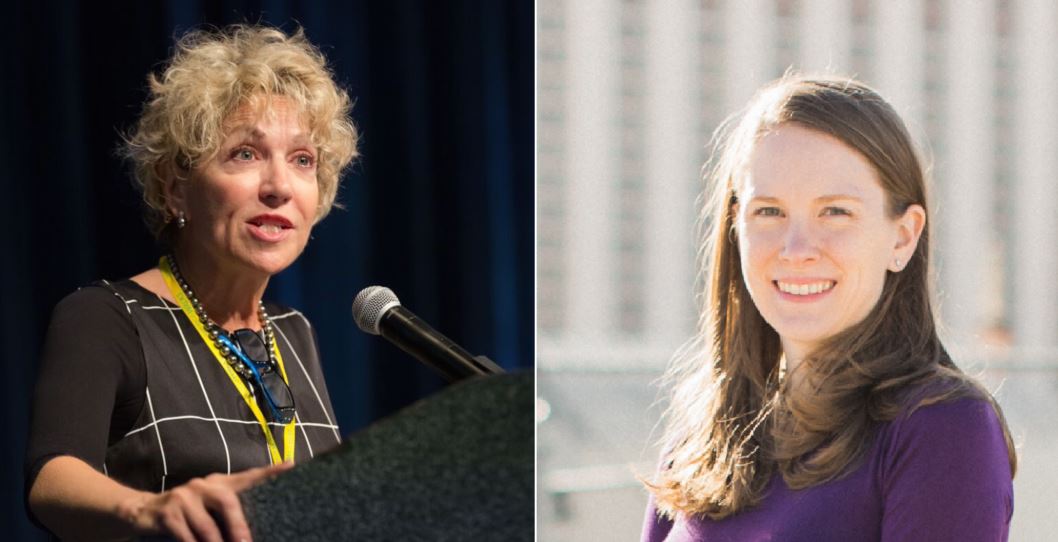
Kate Kraft is executive director at America Walks, and Heidi Simon is deputy director. America Walks is a national non-profit organization that advances safe, equitable, accessible, and enjoyable places to walk by empowering people and communities to effectively advocate for change. To learn more, visit www.americawalks.org.

Cass Isidro is executive director of the Safe Routes to School National Partnership, and Margaux Mennesson is communications and marketing manager. The Safe Routes to School National Partnership is a national non-profit that works to?advance safe walking and bicycling to and from schools, to improve the health and well-being of kids of all races, income levels, and abilities, and to foster the creation of healthy communities for everyone. Learn more at www.saferoutespartnership.org.