ITE Safety Pledge
JOIN ITE IN FOSTERING A CULTURAL SHIFT
TOWARD SAFER TRANSPORTATION
Become an ITE Safety Partner—Sign the Pledge Today
|
Through collaborative and collective action to achieve zero road fatalities, ITE is committed to advancing safety as a fundamental professional responsibility. Transportation professionals shape the systems that people rely on every day. The ITE Safety Pledge invites individuals and organizations to formally commit to making safety a core value of their work—and to take meaningful actions that help prevent fatalities and serious injuries across our transportation network. This pledge supports ITE’s Safety Roadmap and Action Plan and reinforces the shared belief that safety is not optional—it is essential. 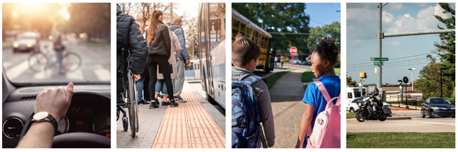 |
The ITE Safety Partner Pledge As an ITE Safety Partner, I pledge to make safety a core value of my work and to champion solutions that prevent fatalities and serious injuries on our transportation network. |
Why Sign the ITE Safety Pledge?
|
What You’ll Be Asked to Do
|
|
10 ACTIONS TO CONSIDER AS AN ITE SAFETY PARTNER
What actions will you take to challenge the status quo and foster a cultural shift toward safer transportation? |
|
| 1 | Support and Advance Safety Knowledge: Participate in the development of ITE technical resources while staying informed on emerging safety research, technologies, and global best practices aligned with Safe System principles. |
| 2 | Reach Beyond Minimum Standards: Supplement minimum design standards with proven best practices and engineering judgment to better address context, risk, and user needs. |
| 3 | Plan and Design Safer Streets for Everyone: Ensure all transportation designs prioritize safety first, while also providing access and mobility for people walking, biking, rolling, driving, motorcycling, and taking transit. |
| 4 | Set and Design for Safe Speeds: Support setting target speeds based on human injury tolerances when appropriate and implementing operational and geometric interventions as well as using safety cameras where permitted. |
| 5 | Use Design to Influence Behavior: Apply self-enforcing street design principles, and not just a posted speed limit, to make safe speeds the natural choice. |
| 6 | Identify Risks Proactively: Consider near-miss, conflict, and exposure data in addition to crash history to inform safety improvements. |
| 7 | Protect Vulnerable Road Users: Apply proven safety design elements such as lighting, safe crossings, and multimodal features that protect people walking, biking, rolling, motorcycling, and using transit. |
| 8 | Measure What Matters: Evaluate success using safety performance and accessibility metrics, in lieu of primary reliance on level-of-service or throughput measures. |
| 9 | Collaborate Across Disciplines: Partner broadly across sectors, including emergency response, public health, enforcement, and community organizations, to advance shared safety goals. |
| 10 | Integrate Land Use and Safety Decisions: Incorporate designs that match local and regional policies and align with how built environments influence long-term travel behavior. |
| Explore the Safety Roadmap and Action Plan |
Become an ITE Safety Partner |
Explore Council & Committee Activities |